Cloud regions are targets
In early 2026, drones and missiles knocked Gulf cloud data centres offline. Whole companies lost their compute and their data in an afternoon.
Panju CoreVault Private Limited
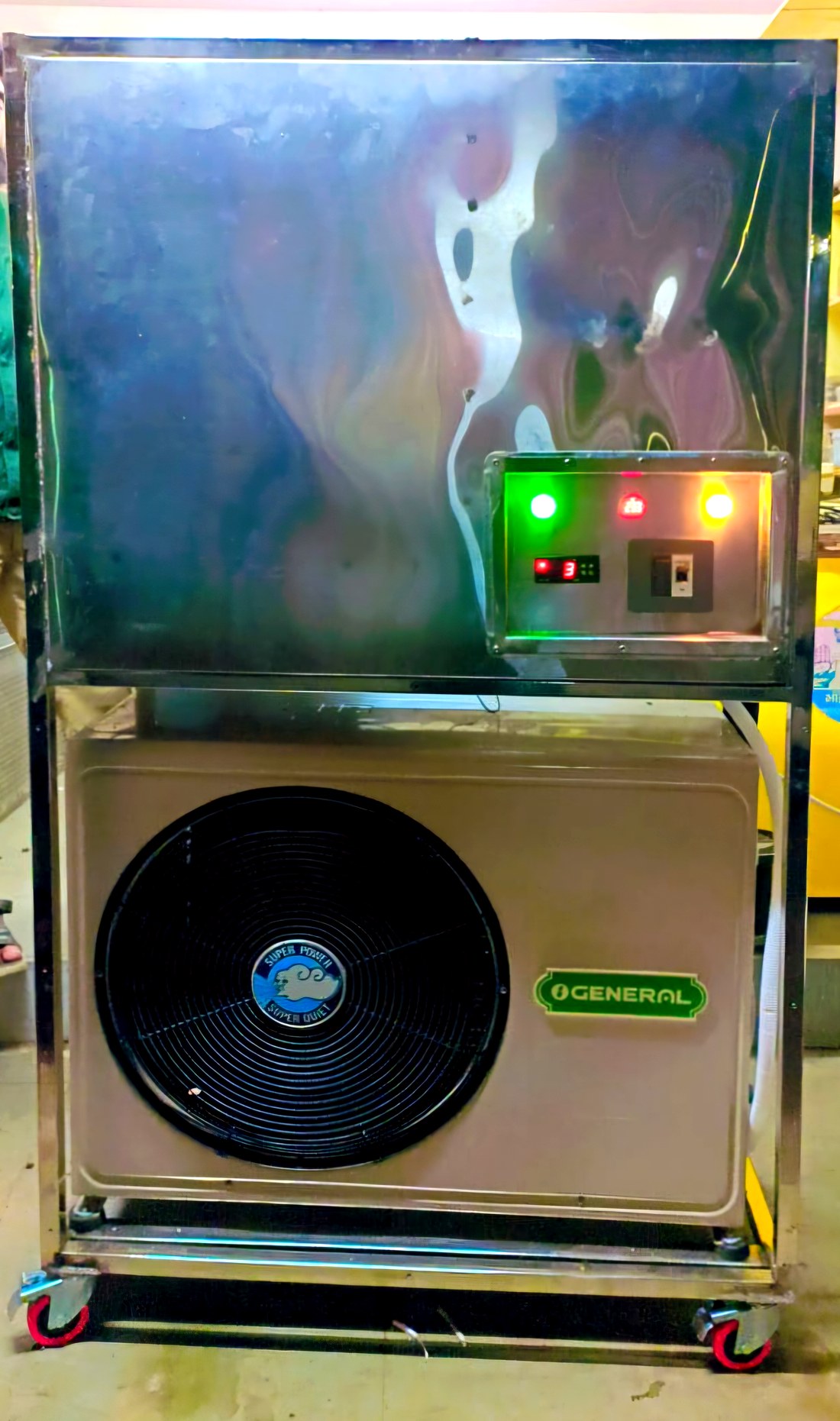
A sealed, immersion cooled AI compute node that runs on zero cooling water and sits where the work is. Your data lives inside your machine, in your building, and nowhere else. Built in India, owned by you.
Why now
In early 2026, drones and missiles knocked Gulf cloud data centres offline. Whole companies lost their compute and their data in an afternoon.
Small nodes spread across sites beat one named facility. There is no single address whose loss takes your compute with it.
Where they run short, governments block new sites and the compute never gets built. CoreVault uses zero cooling water.
The problem
Your data sits in another country, on shared tenancy, under someone else’s law. You pay in dollars, and anyone who can reach that building can reach your work.
You inherit a cooled room, heavy power, water, floor space, permits and staff. The servers were the easy part.
Years and crores before you see a win, and every model trained that way takes more power and water from the people next door.
The solution
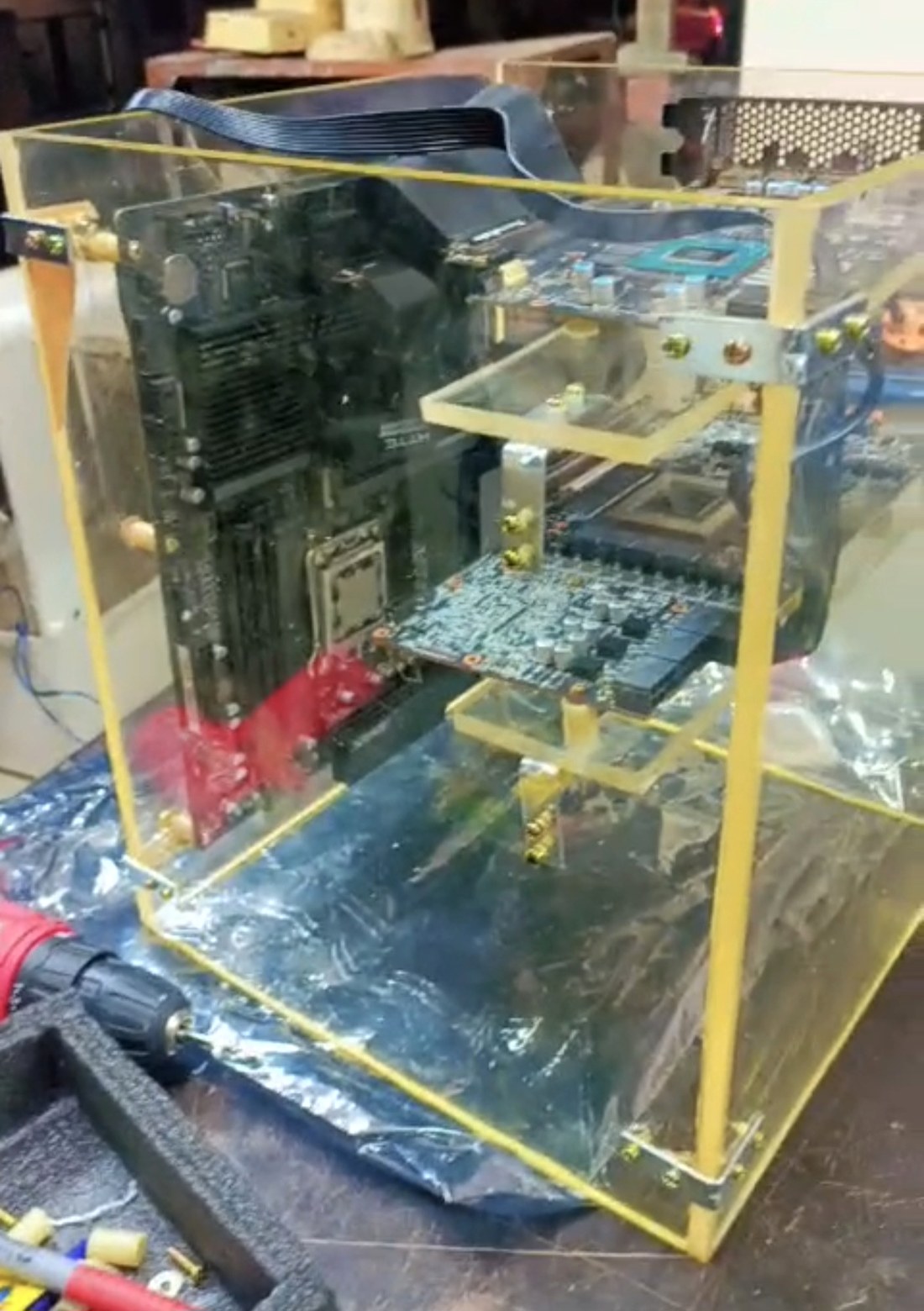
The entire board, GPUs included, runs submerged in dielectric fluid. Quiet and dense, without the PFAS and pressure risk of two phase systems.
Twelve live sensors, real power metering, autonomous thermal control and an automatic safety shutdown. The node reads itself, tunes itself and reports on itself.
A whole server room collapses into a sealed cabinet and one outdoor heat rejection unit, much like a split air conditioner.
The physics
Where every watt in the room goes
At PUE 1.7 nearly half the electricity in an air cooled room never reaches a chip. At 1.07 almost all of it does.
Data sovereignty
For work that cannot leave the country, the question is not how fast your compute is. It is where your data physically sits.
No foreign cloud, no shared tenancy, no cross border transfer, nothing to subpoena abroad. The data stays in your building because the machine is in your building.
A sealed unit on your own network, behind your own firewall. If the contract demands it, the node runs with no route to the internet at all.
Designed, assembled and supported in India, on a patented architecture, billed in rupees, with a person you can call.
Real, not rendered
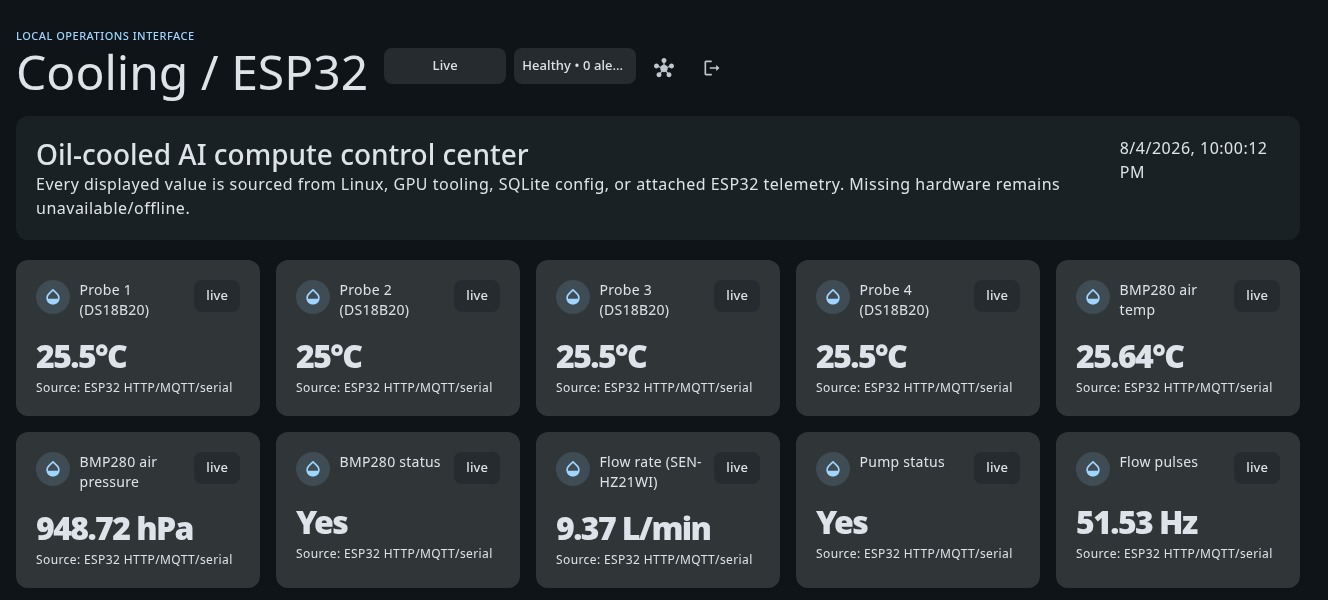
The node’s own telemetry, 5.3 hours without a break
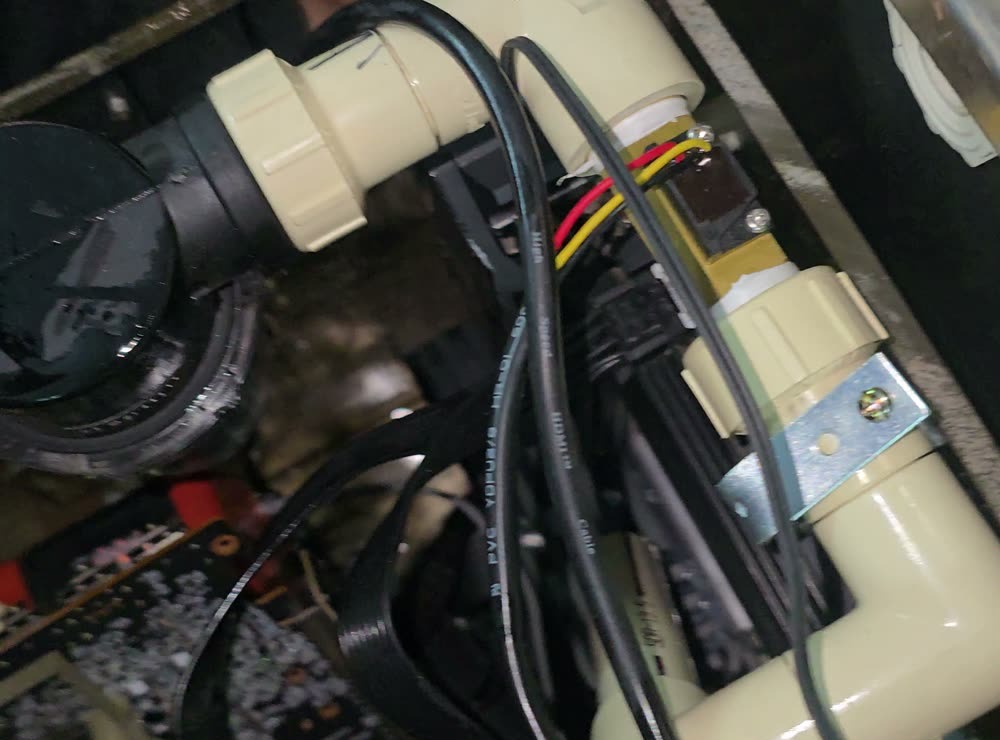
Coolant flow across the same window
The repeating profile is the node holding oil against its setpoint on its own, with the radiator outlet tracking within a degree throughout. Oil stayed between 23 and 28.5 °C, flow between 8.18 and 11.09 L/min.
Why this holds up
Our patent covers the autonomous immersion cooled architecture and its integrated self management. It is on record with the Indian Patent Office and published in the patent journal.
Anyone can buy GPUs or an oil tank. The edge is the combination: immersion cooling, a hardware safety watchdog and the control OS, in one machine.
Dedicated infrastructure physically inside India, with no foreign exchange exposure and local accountability, which foreign clouds structurally cannot match.
And the economics work
The same design that keeps your data in the building also stops your compute from working against the environment.
Same work, against a conventional air cooled room
Own the machine, keep the data, cut the power and the water. The savings are the byproduct, not the pitch.
Who it is for
I came from operations: hospitality, then an MBA, then about nine years running execution in small businesses. What pulled me into compute was watching Indian AI builders pay foreign cloud rates, in dollars, for GPU time they could not get reliably, on infrastructure they did not control. Then I watched what happens when someone else's building goes dark and takes your work with it. CoreVault is my attempt to fix both: owned, immersion cooled nodes, run in India, billed in rupees, with local support.
Shiv Panjnani, Founder
Straight answers
Single phase immersion cooling submerges the hardware in a non conductive dielectric fluid that carries heat away far more efficiently than air. There are no fans fighting hot intake air, no hot aisles and no room scale HVAC. The heat moves straight from the silicon into liquid and out through a compact loop.
A CoreVault node uses about 37 percent less facility power than an air cooled room, because almost all of the power reaching the machine reaches a chip rather than a cooling system. Cooling energy alone falls by roughly 90 percent.
None. Not reduced, none. That matters in places where water is short and new sites are blocked on that basis.
Inside your own machine, in your own building. There is no foreign cloud, no shared tenancy and no cross border transfer. If a contract demands it, the node runs with no route to the internet at all.
About 95 percent less floor area than a server room. A whole server room collapses into a sealed cabinet plus one outdoor heat rejection unit, much like a split air conditioner.
Two to three times longer. Parts run at a steady low temperature instead of cycling hot and cold, which is what wears them out.
Yes. Our patent covers the autonomous immersion cooled architecture and its integrated self management. It is on record with the Indian Patent Office and published in the patent journal.
Designed, assembled and supported in Bhopal, Madhya Pradesh, and billed in rupees.